Peptide Testing: Hplc & Mass Specification Pureness Overview Peak
Hplc & Mass Spectrometry Testing For Peptides: Guaranteeing Purity, Precision, And Study Confidence NorthEast BioLab constantly exceeds expectations on bioanalytical assay development, recognition, and example analysis. At Peak Peptide Supply, every peptide is confirmed with HPLC and MS testing, giving scientists confidence in their job and trusted outcomes every time. Research-grade peptides need to have purity levels of 98% or higher, with premium distributors providing 99.0% to 99.7% pureness. Higher purity makes certain much better study outcomes and decreases interference from contaminants. Yes, study peptides are legal in the UK when sold and purchased purely for laboratory research study functions.
Just how much time does an HPLC examination take?
Time Required for HPLC EDTA Test Reports + Next Actions

What Alternate Characterization Approaches Complement Hplc?
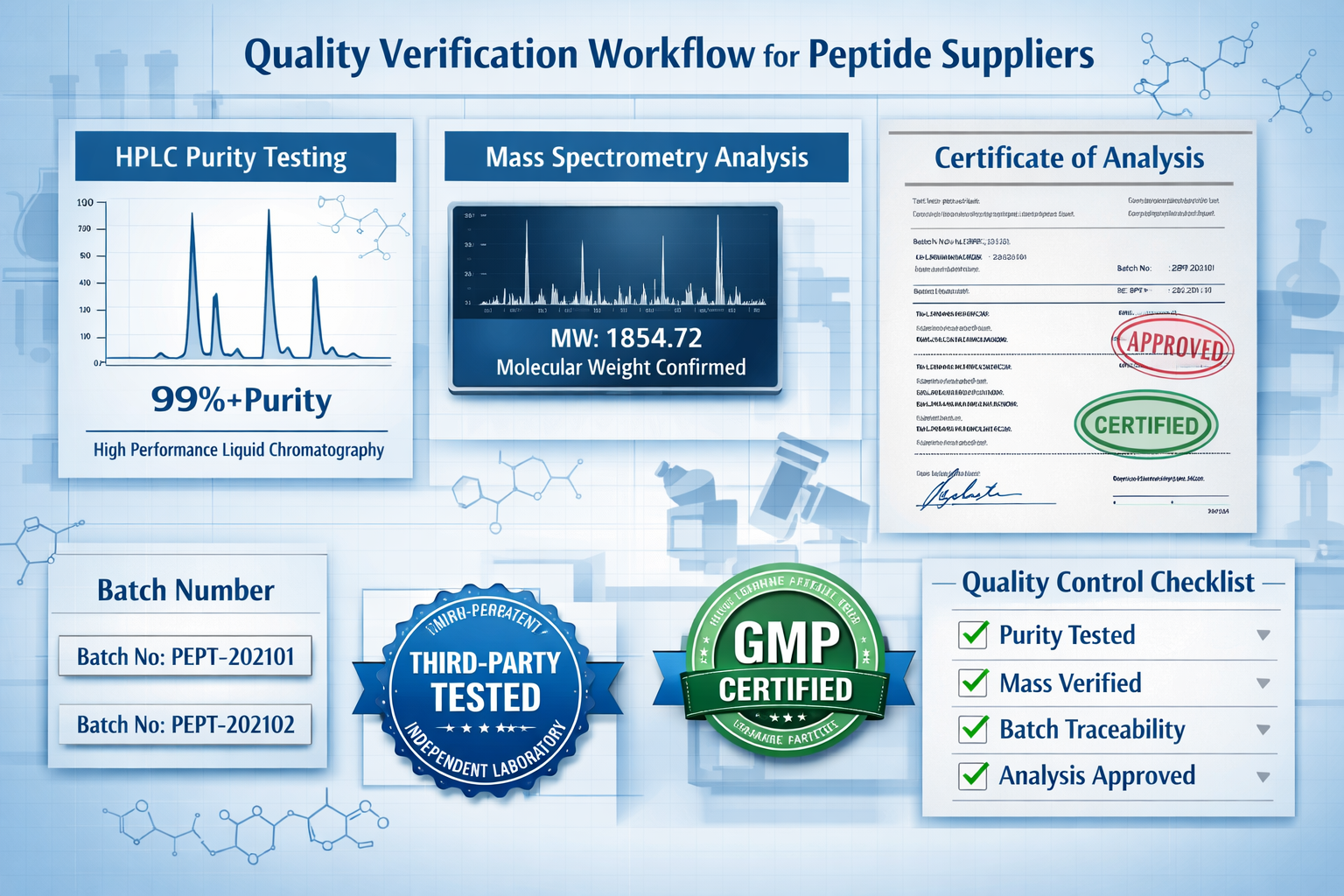
It is one factor appropriate peptide storage and reconstitution methods issue. In the typical peptide COA context, top pureness normally refers to the percentage of total chromatogram location stood for by the primary peptide height. It is an area-percent purity dimension, not a total identity or activity examination. Mass spectrometry verifies whether the determined mass matches the anticipated peptide mass. The top quality and reliability of a peptide pureness measurement depend on approach criteria and documents top quality. The mobile phase, typically a mixture of water, acetonitrile, and an acid modifier, is stored in reservoirs and provided via the system by a high-pressure pump.Exactly How Do We Recognize Peptide Pureness By Rp-hplc?
Also reduced levels of contaminants can change a peptide's biological activity, hinder architectural analyses, or interrupt approach validation. HPLC methods for peptide analysis usage reverse-phase columns with slopes of water and acetonitrile, commonly with trifluoroacetic acid as a modifier. The UV detector keeps an eye on the peptide at Click for info particular wavelengths, typically 214 nm or 220 nm, where peptide bonds absorb highly. Technique recognition guarantees that HPLC results properly reflect peptide pureness. Yet meeting those criteria can be tough for several local business wanting to establish peptide drugs.Make Sure Confidence In Your Research Study With Logical Validation
- Mass spectrometry provides clear-cut verification of peptide identification by measuring the exact molecular weight of the compound, often to within 0.01% of the academic worth.
- This overview discusses the 3 gold-standard analytical approaches-- HPLC, mass spectrometry, and third-party testing-- and just how researchers can analyze results to verify that their substances satisfy research-grade high quality requirements.
- If a peptide is re-tested after storage space anxiety, HPLC can reveal whether brand-new pollutant optimals have shown up or whether the major optimal area has declined.